Overweight Bin (Over Weight)
Posted at February 07, 2019 01:02 pm. Last updated at February 26, 2020 09:02 am


Purpose
The purpose of this document is to outline the steps to follow when it comes to emptying an overweight bin. The procedure is split into two parts: Part 1 is the driver’s part while on site and Part 2 is the Transport part when processing the BNO and OWB's in the morning after the run/s.
Procedure
DRIVER:
1) In the driver electronic run app:
- Take a photo of the contents of the bin/s.
- Add a note saying the number and size and type of bins that are overweight and what they appear to be filled with that contributed to them being overweight.
This might be:
3 x 1100 GW bins overweight. Filled with bricks and building rubble.
or
1 x 660 CM bin overweight. Filled with food scraps.
or
1 x 240 GW bin overweight. Filled with dirt.
2) Attempt to lighten the load of the bin by partially emptying it by whatever means possible or seeking the assistance of a jockey, the customer or really even any bystander to help tip the bin with the lifter.
3) If the bin is able to be emptied, mark the job complete and move on to the next job.
4) If this is simply impossible and the customer is not contactable, after doing the above mark the job BNO and state the reasons in DETAIL and move on to the next job.
Transport:
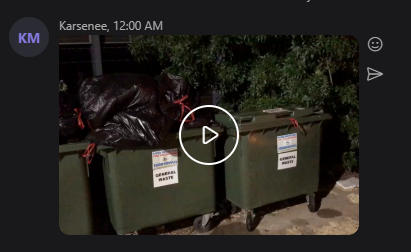
1) Check Skype and Daily Run page first thing in the morning after the run/s for any OWB report. Ensure that the driver/s have captured a photo and/or video of the heavy bin/s reported to be used in case the customer will complain about it.

2. Check the customer's previous collections on AWM-Manage to see how many times the bin has been overweight.
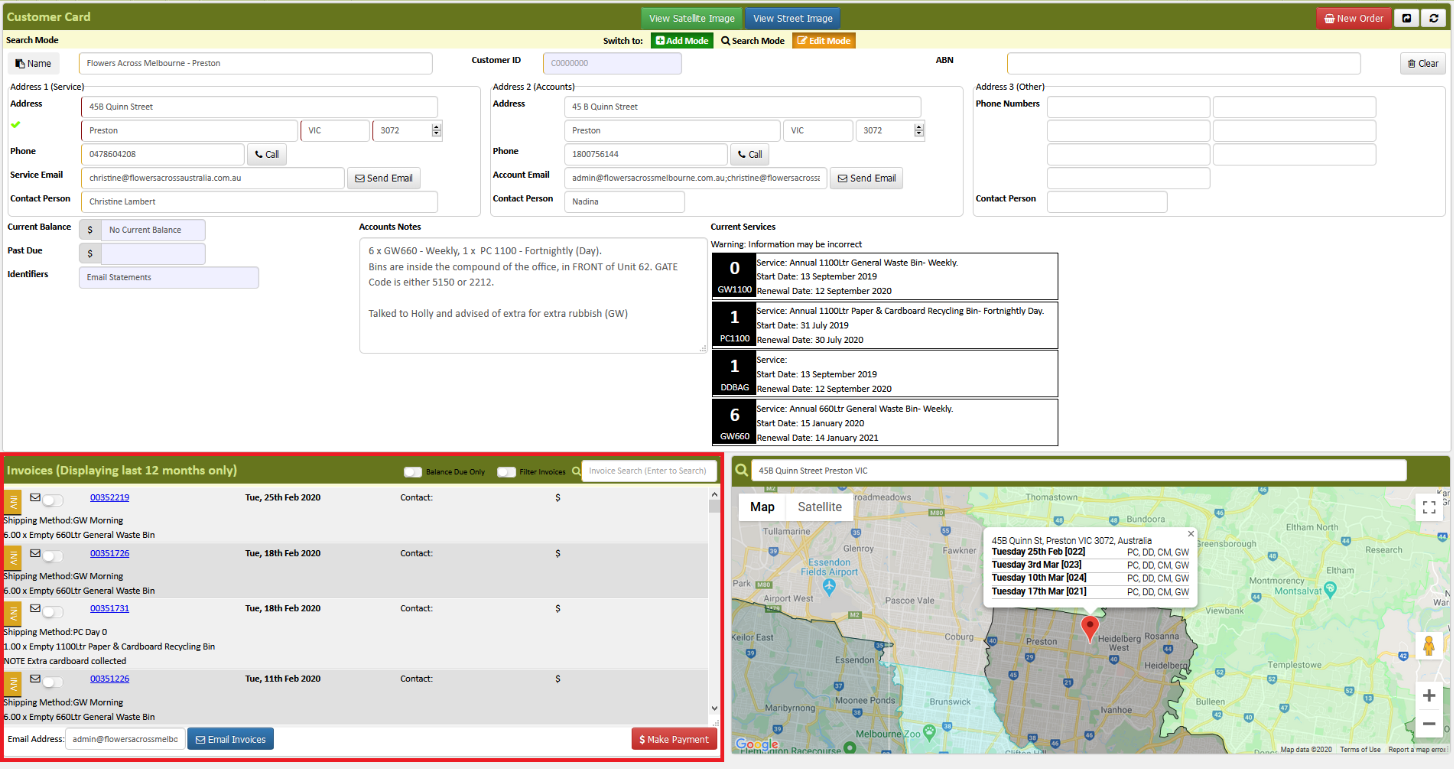
3) If this is the first time, send an email to the customer advising that their bin was overweight on the last collection, listing the date and the overweight materials contained within the bin. At this point, the customer is also advised that should the bin be overweight for any future collections an overweight fee will occur.
Email Template
Dear _________
Thank you for choosing Australian Waste Management for the collection of your general waste bins.
Upon reviewing your last collection on ____________________ the driver has reported that the bin has contained items including____________________________________ which has contributed to the bin being overweight.
Due to the costs associated unfortunately should the bin be overweight for further collections then an overweight fee will be charged at _________ per collection.
Should you wish to discuss options of changing the bin size or to increase the frequency of collections, we are more than happy to discuss this to find a suitable efficient outcome.
I hope that this has been of some assistance, please do not hesitate to contact me if I can help any further
Kind Regards
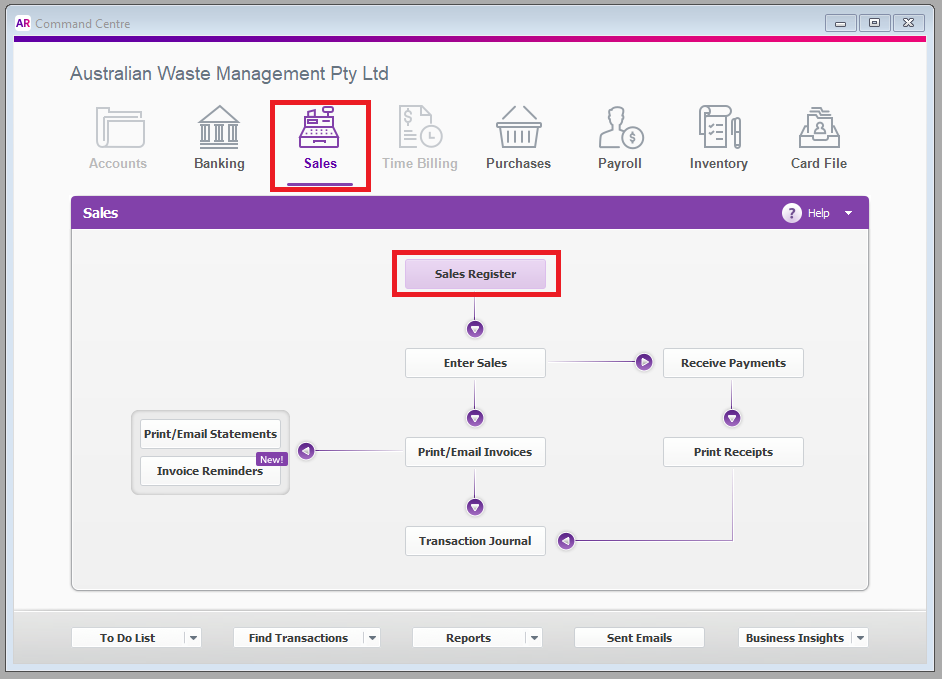
4) Record the OWB in MYOB. First instance is a warning, and the price is removed in the OWB item. A repeated instance is charged with an OWB fee. As of the moment, the fees are 240 litre - $19.00, 660 litre - $39.00 and 1100 litre - $59.00.
a) Under "Sales", click "Sales Register".
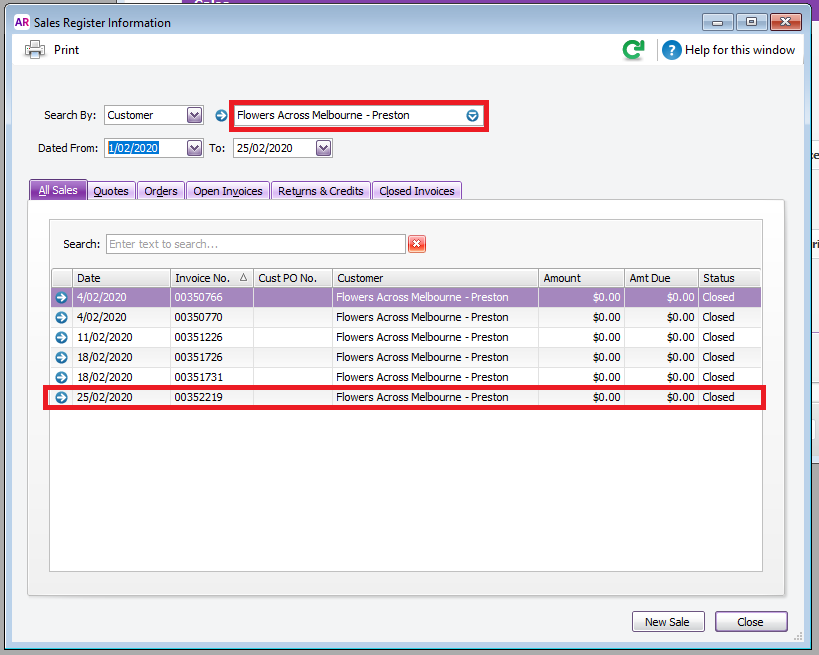
b) Search the customer name, and click the invoice associated with the OWB instance.
c) Add an OWB entry with the fees associated, and click "OK"
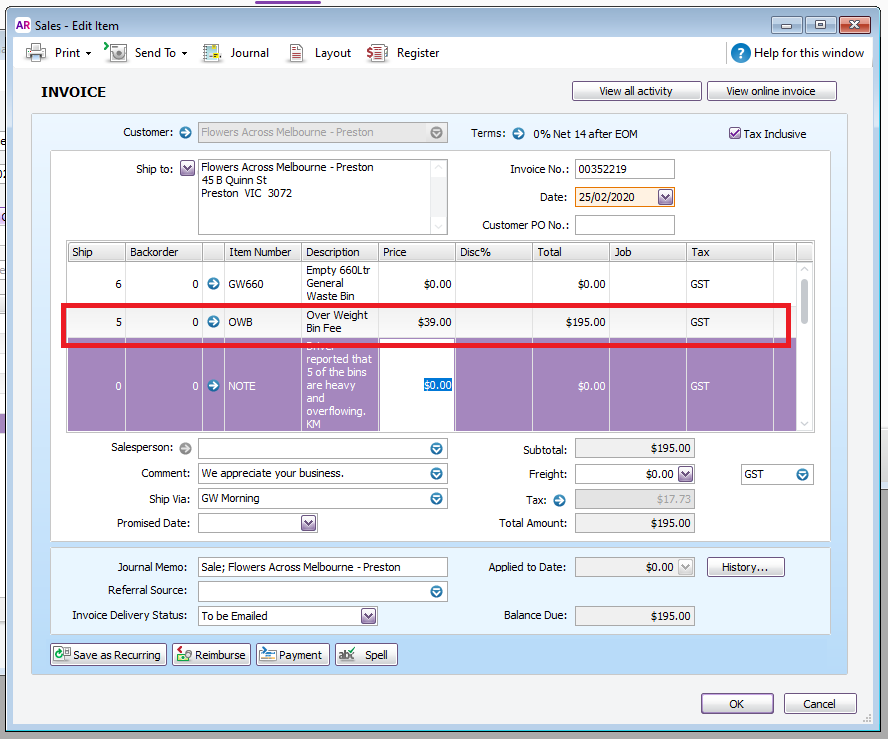
5) For repeated instance that the bin is overweight, the customer is contacted to advise that again the bin was overweight. Therefore, there will be an additional charge applicable. Add the charge to the invoice with all relevant notes, include the contact name, time and date of contact and the outcome that was achieved. Also, include your initials.
6) Should a suitable outcome not be reached refer this to the management with available options and a final decision.
7) Should a bin be over weight for 2 out of their last 3 collections after being notified, the customer must be contacted and required to rectify the issue from the next collection onward.
8) Should a bin be over weight for a 3 out of their last 5 collections, the customer must be contacted and told they will be changed from the size and quantity of bins they are currently on, to the quantity of smaller bins that equates to the same volume of their current bins, so that the bins cannot be loaded up as much, and the price reflects the weight they are placing in the bins.
For example: If a customer has 3 x 1100ltr GW bin that is over weight for 3 consecutive collections, they will be required to change to 6 x 660ltr GW bins to enable the truck to lift the smaller bin, and the price will be slightly higher for the smaller bins which will offset our losses on disposing of the waste.
9) The procedure assumes the bins are heavy (overweight), but not overflowing. If the bins are overweight because they are overloaded (overflowing), swapping for more smaller bins won't fix the issue. The customer needs more bins at their cost on site overall.
10) Make arrangements for the removal of the existing bins and delivery of the smaller bins, credit the balance of the old annual fee and apply it to the new annual fee. All Over Weight Bin fees will remain due and payable.
Comments